
Document library & knowledge base
FRP technical resources & engineering data
Product catalogues, engineering envelopes, design codes, case studies, and practical composite knowledge for engineers, plant managers, and procurement teams.
- ASTM, BS & DIN Compliance
- ISO 9001:2008 Certified Quality
- Direct Engineering Datasheets
9 Sections
Knowledge Base
Technical Archive
100,000L
Max Vessel Envelope
ASTM D3299
ISO
9001:2008 Certified
Since 2008
4-Hour
Technical Support
Engineering Desk
Downloadable literature
Product Catalogues & Datasheets
Verified technical documentation for equipment sizing and tender preparation.
HCl / Hypo Storage Tanks — Datasheet
In preparation by engineering desk:
Need one of these for an active tender? Ask our engineering desk directly
Capability envelopes
Technical Data & Manufacturing Range
Our two primary equipment envelopes covering our Rajkot manufacturing line. Exact specifications are confirmed per order.
Tanks & vessels
Capacity & Thickness Envelope
Capacity1,000 – 100,000 L
Wall Thickness25 – 50 mm, depending on design pressure & volume
Covers, trays & gratings
Dimensions & Load Rating
Dimensions600 / 800 / 1000 mm standard, custom sizes available
Load ClassLight 1–3 t · Medium 5–12 t · Heavy 25–40 t
Material selection
Chemical Resistance & Resin Selection Chart
Recommended resin systems and corrosion barriers for common process chemicals. Exact resin and lining are confirmed against your actual concentration and duty cycle before manufacturing.
Hydrochloric Acid
HCl · Up to 33%
Resin systemBisphenol-A Epoxy Vinyl Ester
Max service temp90°C / 194°F
Design standardASTM D3299 / BS 4994
Complete immunity to aggressive hydrochloric chloride stress cracking. Proven 20+ year service life in chlor-alkali pickling lines.
Sulfuric Acid
H₂SO₄ · Up to 98% (Conc.)
Resin systemNovolac Epoxy Vinyl Ester / PVDF Dual-Laminate
Max service temp65°C / 149°F
Design standardASTM D4097 / DIN 16965 / EN 13121
High cross-link density Novolac matrix or PVDF thermoplastic lining eliminates oxidative polymer chain cleavage above 70% concentration.
Sodium Hypochlorite
NaOCl · 10% – 15% (Available Chlorine)
Resin systemVinyl Ester with BPO / DMA Catalyst System
Max service temp55°C / 131°F
Design standardASTM D3299 / ASTM D4097
Strict exclusion of cobalt promoter prevents catalytic hypochlorite decomposition and chlorination blister formation.
Sodium Hydroxide (Caustic Soda)
NaOH · Up to 50%
Resin systemEpoxy Vinyl Ester (Synthetic Veil Only)
Max service temp85°C / 185°F
Design standardASTM D3299 / BS 4994
Synthetic veil creates a monolithic barrier immune to alkaline etching, preventing caustic embrittlement and fibre debonding.
Nitric Acid
HNO₃ · Up to 65%
Resin systemPVDF / ECTFE Dual-Laminate with FRP Backing
Max service temp60°C / 140°F
Design standardDIN 16965 / EN 13121 / BS 4994
Strong nitrating acid attacks unlined thermoset polymers. Fluoropolymer dual-laminate delivers absolute chemical impermeability.
Phosphoric Acid
H₃PO₄ · Up to 85%
Resin systemBisphenol-A / Premium Isophthalic Polyester
Max service temp95°C / 203°F
Design standardASTM D3299 / IS 10651
Excellent service record in fertilizer and agrochemical plants. Outstanding abrasion resistance against slurry trace solids.
Ferric Chloride
FeCl₃ · Up to 40%
Resin systemEpoxy Vinyl Ester / Isophthalic Polyester
Max service temp85°C / 185°F
Design standardASTM D3299 / EN 13121
Completely immune to pitting and crevice corrosion that causes rapid failure in SS 304/316 metallic vessels in water treatment.
Industrial Effluent & ETP Wastewater
Mixed Streams (pH 1.0 – 13.0) · Fluctuating / High TDS & COD
Resin systemChemical Grade Isophthalic / Vinyl Ester
Max service temp75°C / 167°F
Design standardIS 10651 / BS 4994
Unaffected by microbial-induced corrosion (MIC), fluctuating acidic/alkaline wash cycles, and high salinity brine solutions.
Working with a chemical not listed here? Send us your process conditions for a specific resin recommendation.
Installation & handling
10 KL pressure vessel: installation notes
From FGP's installation manual for the 10 KL FRP pressure vessel. Read before lifting, installing or pressurising the tank.
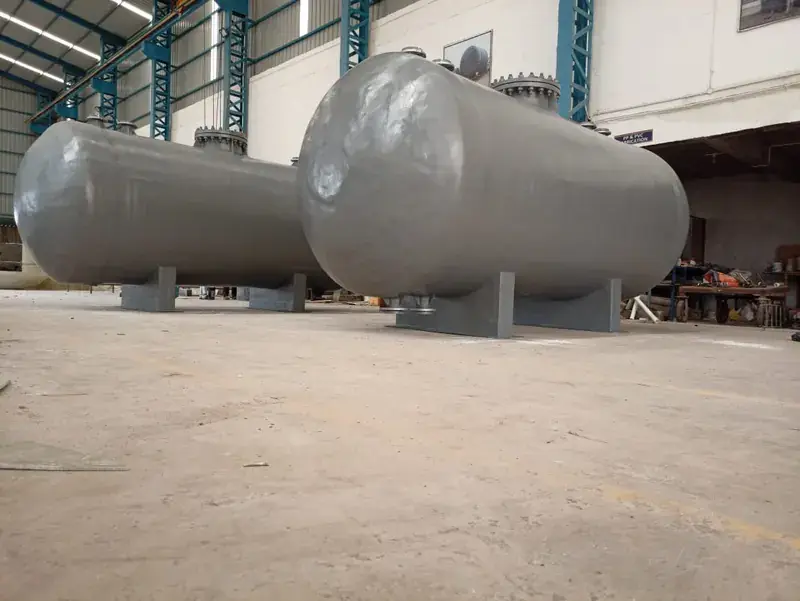
10 KL FRP Pressure Vessel: specification
- Capacity
- 10,000 L
- Diameter
- 1,800 mm
- Length
- 4,520 mm
- Maximum operating pressure
- 6 bar
- Hydrostatic test pressure
- 8 bar
- Working temperature
- 80 °C
- Shell material
- FRP
- Dish-end material
- FRP
- Design code
- ASME / BS
Service: Hot-water service (hydraulic pressure only, not pneumatic).
Handling
- Always lift the tank with two belts (slings).
- Never roll the tank during handling.
Installation
- 1
Inspect the tank for any damage that may have occurred in transit.
- 2
Set the tank in place and connect it to the piping system, including isolation valve(s) and a drain.
- 3
Purge air from the system before putting the tank into operation. System water is held behind the dish end on all models.
- 4
When filling with water, open the valves to the tank so any residual air is displaced by water.
- 5
Check all nuts, bolts and BSPT connections before applying pressure.
Before you pressurise
- Designed for hydraulic pressure only. Do not pressurise with air or gas.
- Tanks are tested at 8 bar, but the warranty is void if operating pressure exceeds the 6 bar design pressure.
Standards & codes
Standards Compliance & Certification
Our Kuwadwa plant holds ISO 9001:2008 certification. Equipment is engineered to international BS, ASTM, and ASME standards.
Commissioned work
Case Studies & Turnkey Deployments
Explore our commissioned installations across biogas, wastewater treatment, and chemical plants.
Equipment visuals
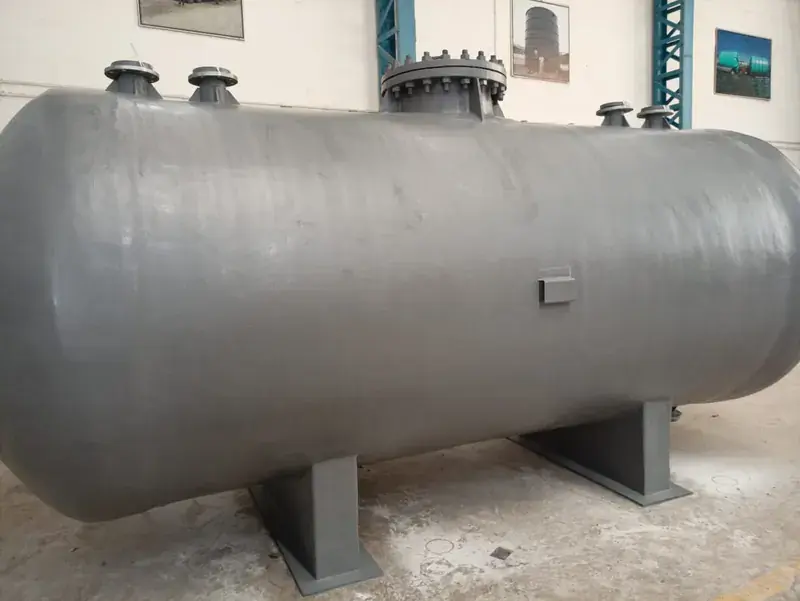
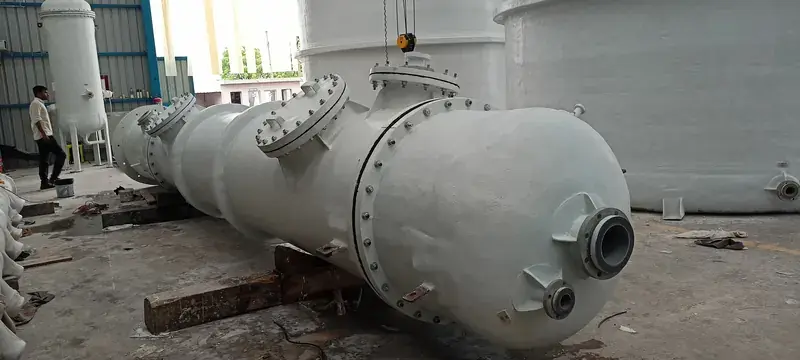
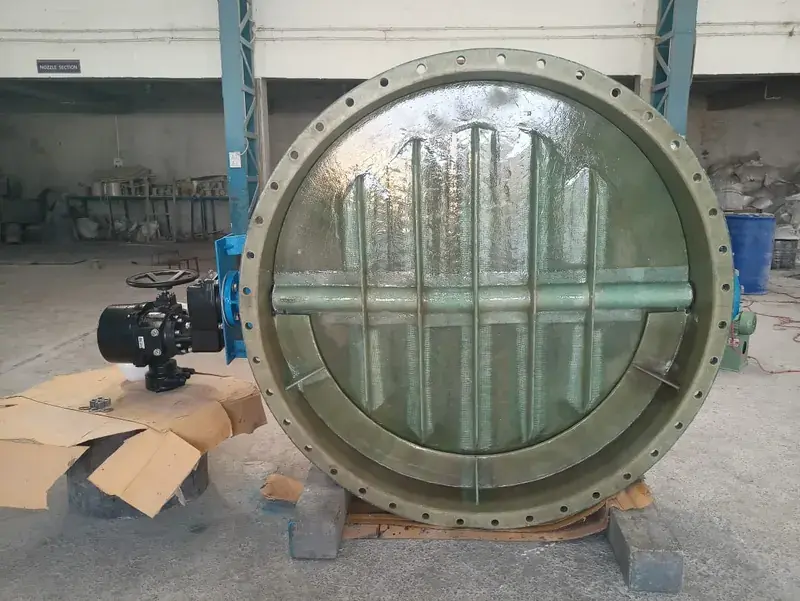
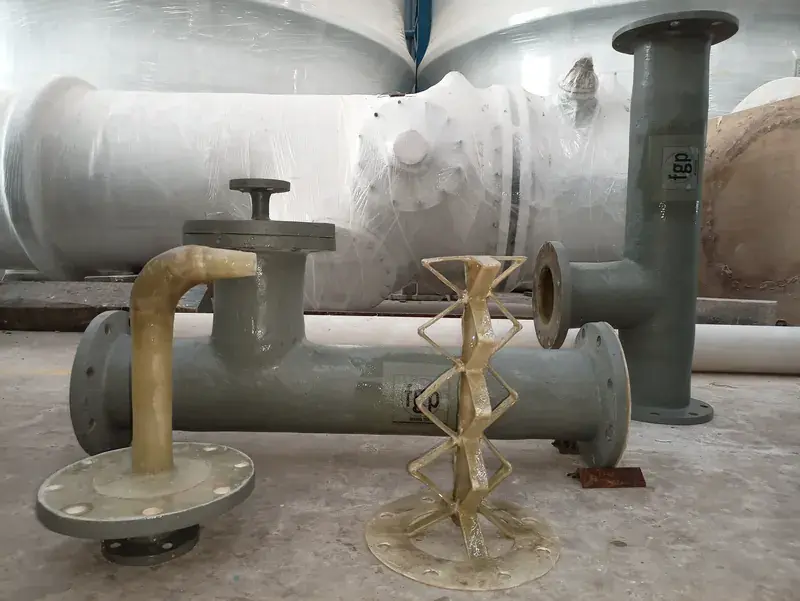
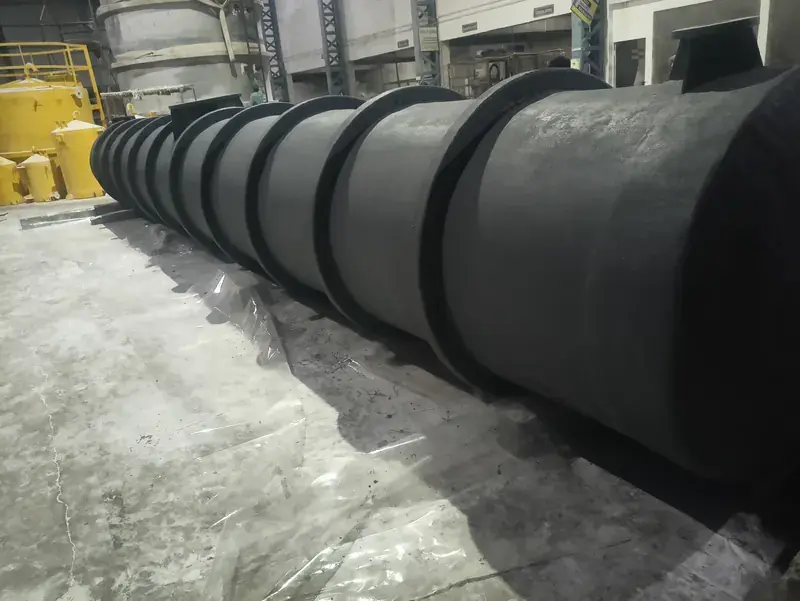
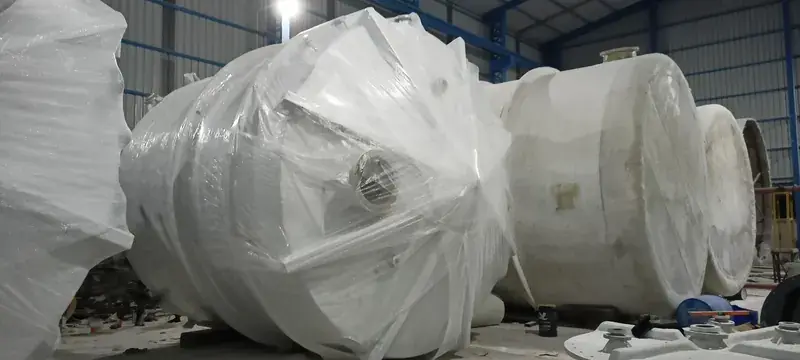
Product & Facility Gallery
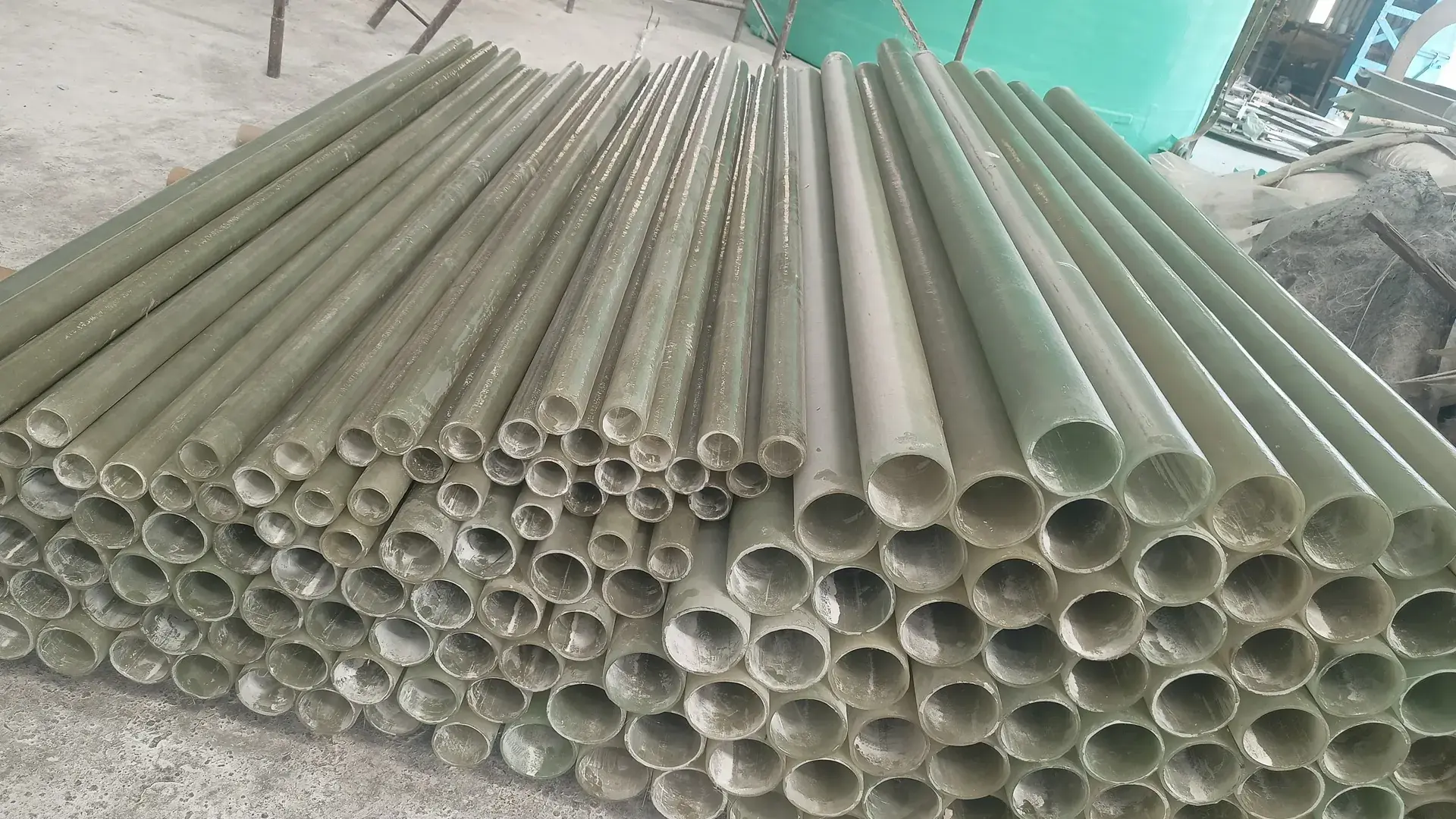
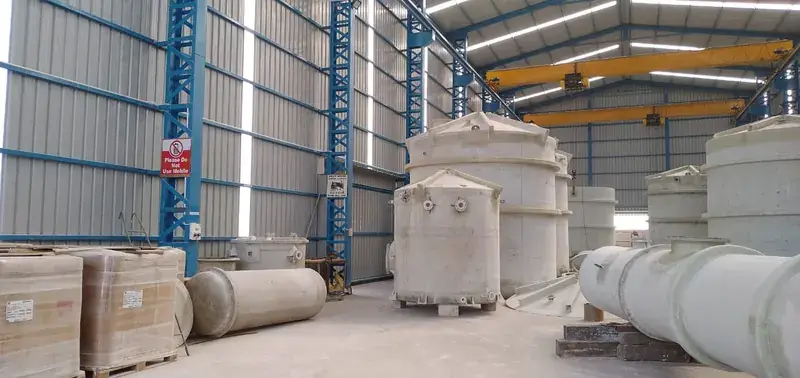
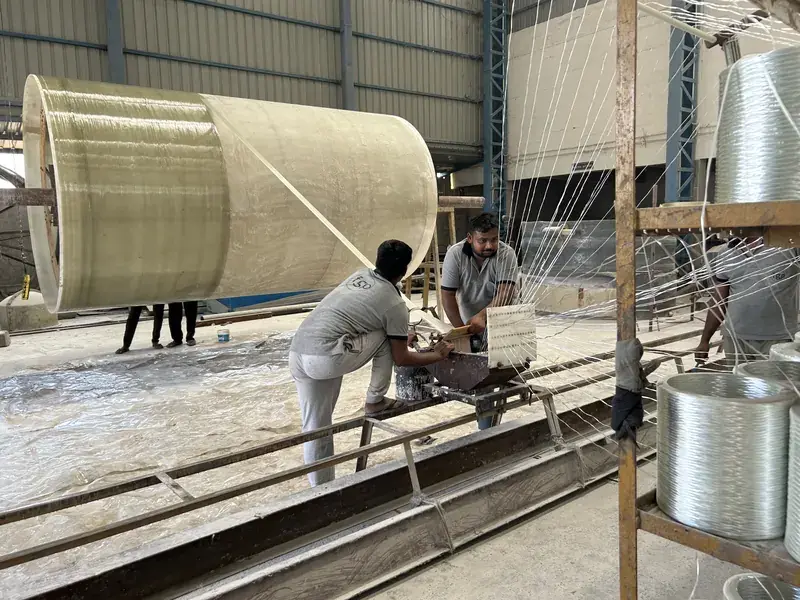
A visual look across our manufactured equipment line in Rajkot, Gujarat.
Knowledge base
Frequently Asked Questions
Clear answers regarding composite chemical compatibility, warranties, and fabrication lead times.
What capacity range do you manufacture?+
Our FRP tanks and vessels are built across a 1,000–100,000 litre range as standard, with larger custom capacities available on request.
What materials do you work with?+
FRP with isophthalic or vinyl ester resin as standard, plus PP, PPH, UPVC, CPVC, PVDF, and ECTFE construction for specific chemical-compatibility requirements.
What standards do your products comply with?+
ASTM, BS, and DIN for tanks and vessels; IS 14333, EN 124, and ASTM D2583 for covers, trays, and grating-class products. Our facility is ISO 9001:2008 certified.
What's the expected service life of an FRP tank?+
15–20 years under normal operating conditions and maintenance, well beyond typical metal tank service life in corrosive environments.
Can you build to a custom specification?+
Yes — wall thickness, internal lining, fittings, and dimensions are engineered per application. Standard capacity and material ranges are a starting point, not a limit.
Do you supply outside Gujarat?+
Yes, we manufacture and export FRP products from our Rajkot facility. Contact us with your location and requirements for logistics and lead time.
Technical articles
Engineering Knowledge Archive
Deep-dive articles written by our engineering team on composite design, dual laminates, and chemical resistance.
Custom FRP Fabrication: Building for Energy, Water & Chemical Industries
Why off-the-shelf tanks rarely fit industrial process requirements, and what a custom FRP build actually changes.
From Steel to Composite: The Shift Toward FRP in Power Plants
Ducting, scrubbers, and absorber towers are where power-plant emissions control quietly moved from metal to composite.
Designing Lightweight Strength: Inside Our FRP Manufacturing Process
How filament winding and hand lay-up construction get FRP's strength-to-weight ratio without over-building the wall.
Zero-Corrosion Solutions: How FRP Extends Equipment Life
Corrosion is a maintenance-budget problem before it's a failure problem — FRP changes which one you're managing.
Get in touch
Need custom datasheets or CAD sizing?
Let's engineer to your exact envelope.
Our technical engineering team prepares custom chemical resistance charts, wall thickness calculations, and commercial proposals.
Talk to an engineer